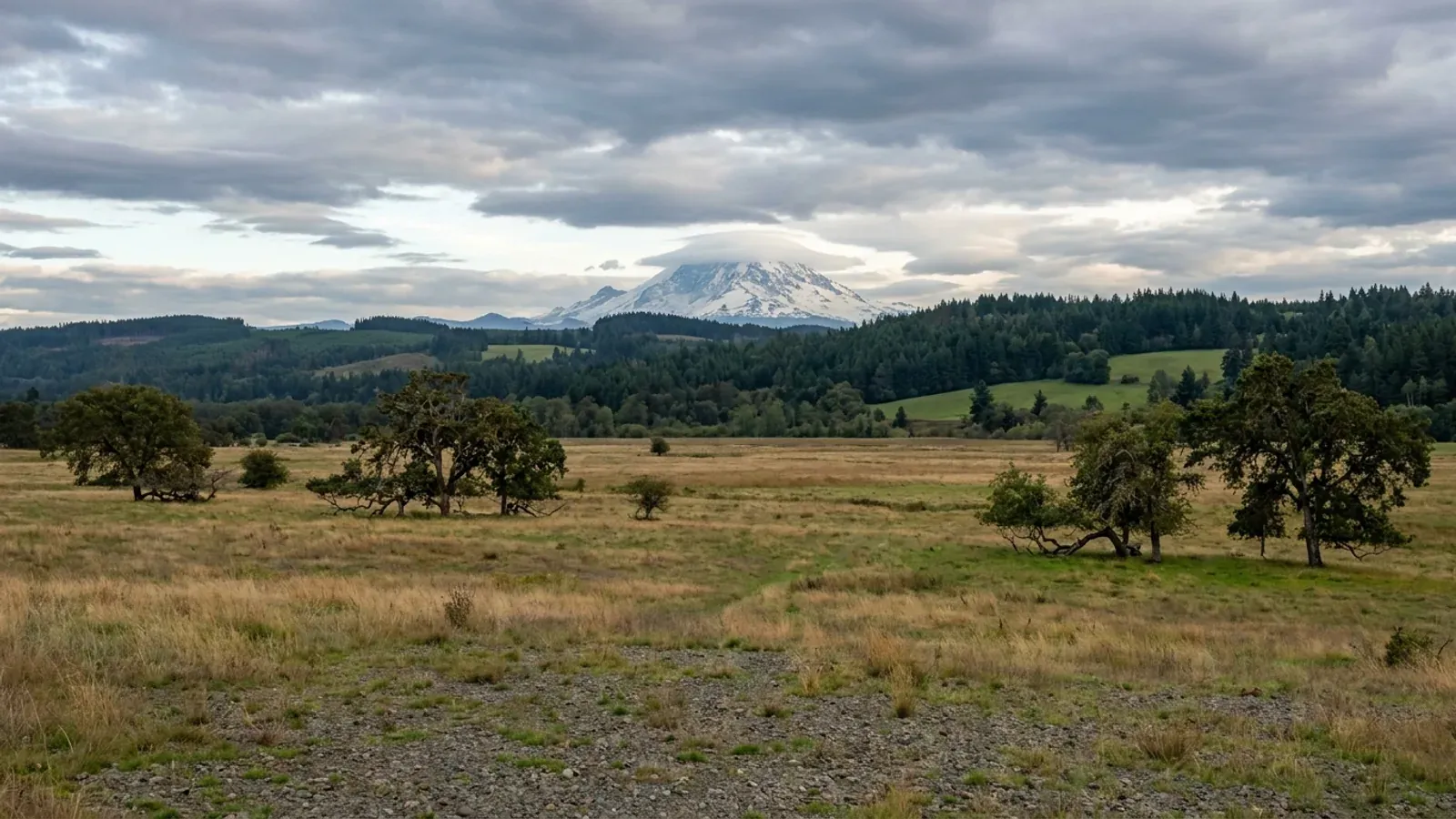
Barndominium Builders in Pierce County, Washington
Most of the acreage in the South Sound that suits a barndominium is in unincorporated Pierce County: the rural ground around the foothill towns, the farm valleys, and the forested land stretching toward the mountain. This is where a buyer from Tacoma or Puyallup usually lands when they want a wide shop bay, room for animals, or a pole barn homes plan on a few acres. Outside the cities, Pierce County Planning and Public Works issues the building permit, the county's rural zones set the density, the Tacoma-Pierce County Health Department permits the septic system, and a new home on a new exempt well carries a recorded water limit that depends on the watershed. Parcels served by a well or septic also go through a required early screening before the permit. Barndominium kits fit owners who want to erect the shell themselves; a turnkey build fits those who want one team from site work to finish. Share the parcel number and we will check the zone, the critical-area map, the watershed and the septic path before any drawing starts.
Pierce County at a glance
- County
- Pierce County
- Building permit
- County building department
- Land use
- County rural and resource zoning
- Wastewater
- Septic permit from the health jurisdiction
- Water
- Private well
Barndominium Builders Near Pierce County
From a turnkey build to a shell you finish yourself, the work starts with the parcel: the access, the building pad, the route to sewer or septic, and the water source. The parcel decides the budget more than the floor area does, so each option is priced against your land rather than a rate card.
Turnkey Builds
Turnkey barndominiums in Washington State: one team from land and permits to the finished, inspected house, with water, septic and energy code planned in.
Custom Plans
Custom barndominium plans for Washington State: floor plans and permit drawings with the energy code credits and your site's design values built in.
Site Preparation
Barndominium site preparation in Washington State: clearing, grading, drainage and pads, planned around the well, septic area, wetlands and the climate.
Permitting
Barndominium permits in Washington State: city or county building permit, water supply evidence, septic permit, energy code credits and rural zoning.
Barndominium Kits and Pole Barn Homes in Pierce County
A kit suits an owner who wants to raise the shell with their own crew. A pole barn home sets its frame on posts and trusses (the engineering term is post-frame construction) and suits a wide, simple layout with a shop bay under the same roof; a metal building home uses a bolted steel frame. Which one fits your parcel comes down to the zoning, the site and the design values the local building office publishes, covered below.
Barndominium Kits
Barndominium kits and shell kits for Washington State land: frame, panels and drawings, sized to the design values your city or county sets for the site.
Pole Barn Homes
Pole barn homes and pole barn house kits for Washington State: post-frame buildings with a shop and living space, designed to your county's snow load.
Metal Homes
Metal building homes in Washington State: steel-clad houses finished to the state energy code, with the insulation and condensation details done right.
Building a Barndominium in Pierce County: Permits, Zoning, Septic and Water
On rural land the zoning, septic and water answers often come before the building answer. Here is who decides each part in Pierce County, taken from the office or document that publishes it. Rules change, so check them again against your parcel before anything is drawn.
Pierce County Planning and Public Works (Development Center)
Planning and Public Works has regulatory jurisdiction over unincorporated Pierce County, the areas outside an incorporated city; cities and towns inside the county issue their own permits. A new house on rural land is applied for through the county's residential permit process, and the county's About My Property tool shows which jurisdiction a parcel falls under.
Source: Frequently Asked Questions, Pierce County Planning and Public Works (piercecountywa.gov)
Pierce County Planning and Public Works
The Growth Management Act leaves rural density to the county plan, and Pierce County's zoning code is where the lot rules live. Its rural residential zones are Rural Separator, Rural 5, Rural 10, Rural 20, Rural 40, Rural Sensitive Resource, Rural Farm and Park and Recreation, with Agricultural Resource Lands and Forest Lands as separate resource zones.
Source: 18A.10.090 Rural and Resource Zone Classifications, Pierce County Code (pierce.county.codes)
Tacoma-Pierce County Health Department
Off the sewer, the Tacoma-Pierce County Health Department permits the system in three steps: it approves a design submitted together with the water availability, issues an installation permit, and then requires a record drawing showing exactly what went into the ground.
Source: Septic System and Individual Well Forms and Applications, Tacoma-Pierce County Health Department (tpchd.org)
Pierce County Planning and Public Works; Tacoma-Pierce County Health Department
The county applies the Streamflow Restoration rules to any building permit on a new permit-exempt well, with the restriction recorded on the title. In WRIA 11 a new home on a new exempt well pays a $500 fee and may withdraw up to 3,000 gallons per day. In WRIA 10, WRIA 12 and WRIA 15 the limit is 950 gallons per day. Existing wells are not affected.
Source: New Permit-Exempt Wells, Pierce County (piercecountywa.gov)
- Required pre-application screening
- Most of Pierce County's pre-application services are optional, but a Level 1 Pre-Application Screening is required for certain projects, including those with critical area indicators, special site restrictions, or properties served by on-site septic systems or private wells, which covers most rural home sites.
- Critical areas on the ground
- The county warns that it has not mapped every critical area, and that the actual presence or absence of critical areas on the ground, as defined in Title 18E of the county code, decides permit requirements in unincorporated Pierce County regardless of what maps show. Wetlands and fish and wildlife areas can be confirmed with county staff.
Source: Residential, Pierce County Planning and Public Works (piercecountywa.gov)
Source: Frequently Asked Questions, Pierce County Planning and Public Works (piercecountywa.gov)
Building on land near Pierce County
Before you commit to a rural parcel, check four things: the zone (Rural 5 through Rural 40, Rural Farm or a resource zone), the watershed the well will draw from, whether soils will pass a septic evaluation, and whether wetlands or streams sit on or next to the lot. A home site with a well or septic goes through the county's required Level 1 screening, which is the right time to find those limits. Forested ground may need clearing and a longer driveway; valley ground can carry flood mapping. Converting enrolled farm or timber acreage can also bring back taxes, so ask the assessor if the land is in a current-use program. We handle the site preparation and the permitting sequence.
Other places in this part of Washington
Tacoma, Olympia & the South Sound
- Tacoma
- Puyallup
- Olympia
- Pierce County
- Thurston County
- Mason County
- Lewis County
Have land in or near Pierce County? Tell us about the parcel and what you want on it, and we will check it against the local rules before anything is drawn.
Building in Pierce County: questions
Start the surveyHow much does it cost to build a barndominium in Pierce County?
Do I need a building permit for a barndominium in Pierce County?
How much water can a new well use for a Pierce County barndominium?
Keep reading
What usually comes next once you know what Pierce County allows.
Barndominium Cost Guide
Sourced per-square-foot ranges by tier and size, and what moves the number on your land.
Read itIs a Barndominium Legal in Washington?
Zoning, rural land, septic, water and who inspects, before you buy the land.
Read itHow Long Does It Take?
From parcel to move-in, and which steps set the clock.
Read itSources for this page
The published pages behind the Pierce County facts above. Rules change, so check the current version with the office before you rely on it.
- Frequently Asked Questions, Pierce County Planning and Public WorksBuilding permit authority; Critical areas on the groundpiercecountywa.gov
- 18A.10.090 Rural and Resource Zone Classifications, Pierce County CodeLand use and zoningpierce.county.codes
- Septic System and Individual Well Forms and Applications, Tacoma-Pierce County Health DepartmentSewer or septictpchd.org
- New Permit-Exempt Wells, Pierce CountyWater supplypiercecountywa.gov
- Residential, Pierce County Planning and Public WorksRequired pre-application screeningpiercecountywa.gov
Other places near Pierce County
Nearby places with their own pages. Across a city limit or a county line the permit office, the zoning, the septic program and the water rules can change, so each is covered separately.
Building in Pierce County?
Start with the survey. Tell us where the land is and what you want on it, and we will come back with which offices decide it, what the zoning allows, and a plan to fit.